
Sewer & Drain Cleaning Services Miami — Same-Day Service Since 1990
When your drain won’t clear, your sewer is backing up, or you’re hearing gurgling from fixtures you haven’t touched — you’ve got a drain and sewer problem. Not a plumbing problem. And they’re not the same thing.
Miami’s pre-1975 housing stock has a specific drain and sewer challenge: cast-iron pipes that were installed when your house was built are now 50+ years old, corroding from the inside, cracking under shifting soil, and catching roots from mango and ficus trees that have had decades to grow. We specialize in exactly this problem.
Need water heater service, leak detection, or repiping? See our plumbing services. AC trouble? See our air conditioning services.
Call (305) 504-6091 for same-day drain & sewer service across Miami-Dade, or book online in under 60 seconds. Licensed (#CFC1433145), insured, and serving Miami homeowners since 1990.
Drain Cleared Last Year
5-Star Reviews
Active Customers
Satisfaction Guaranteed
The Problem
Cast-Iron Drains, Tree Roots, and South Florida Soil Are Slowly Destroying Your Sewer Lines
Most Miami-Dade homes built before 1975 have cast-iron drain and sewer lines. And most of those are now at or past the end of their 50-year service life. You don’t see it happening — cast iron corrodes from the inside out, slowly narrowing the pipe interior, catching debris, attracting tree roots through every crack, until one day the kitchen drain won’t clear no matter what you pour down it.
Add South Florida’s sandy fill, high water table, and aggressive tree species (ficus, mango, royal poinciana), and you have the perfect environment for drain and sewer failures. Here’s how we solve the three problems we see most:
Clogged drains — cleared in one visit, without damaging old pipes
Most Miami drain problems are structural, not just a hairball. A rookie plumber with a snake can punch through a temporary clog and be gone in 20 minutes — but leave your pipe worse off than before. We diagnose with a camera inspection first (included on every sewer call), then choose snake, auger, or hydro-jet based on what your pipe actually needs. Guaranteed results or we come back free.
Full pricing and methods are on our drain cleaning in Miami page.
Cast-iron sewer line failures — repaired without tearing up your yard
Trenchless pipe lining and pipe bursting let us rehabilitate or replace a failing sewer line with just two small access points — no tearing up your driveway, pool deck, or landscaping. For homes where full replacement is necessary, our hydro-excavation crews minimize disruption and can usually have your yard back to normal in a week.
Recurring backups — solved at the source, not just cleared
If your main drain backs up more than once a year, you don’t have a clog problem — you have a pipe problem. We’ll run a sewer camera, locate exactly where roots are entering or where your pipe has collapsed, and show you the footage. Then we give you three options: patch (quick, short-term), trenchless line (medium cost, 50-year fix), or full replacement. Your choice, your timeline.
DRAIN & SEWER SERVICES
Every Drain, Every Sewer Job — One Phone Call
We handle every clog, backup, and sewer failure scenario from kitchen sink to street connection. Every technician is trained on camera inspection, hydro-jetting, and trenchless techniques — not just “snake it and run.”
Repair & installation
Drain Cleaning
- Kitchen sink drain cleaning
- Bathroom sink, tub, and shower drain cleaning
- Toilet clearing and flange replacement
- Laundry drain cleaning
- Floor drain and utility drain cleaning
- Multi-drain simultaneous clearing (signals main-line issue)
REPAIR & INSTALLATION
Hydro-Jetting
- Residential hydro-jetting (4,000 PSI) for grease, scale, and root buildup
- Commercial hydro-jetting (up to 18 GPM) for restaurant and property management clients
- Preventive annual hydro-jetting for restaurants and high-use properties
- Storm drain jetting for homes with French drain or sump systems
repair & installation
Sewer Line Repair & Replacement
- Sewer line diagnosis with HD camera inspection
- Trenchless sewer repair via pipe lining (CIPP) — no dig-up
- Pipe bursting for complete pipe replacement without trenching
- Full sewer line replacement with hydro-excavation
- Sewer lateral repair (house to city main connection)
- Root intrusion removal and recurrence prevention
Repairs & Installations
Cast-Iron Pipe Services
- Cast-iron pipe diagnostic and condition report
- Cast-iron drain line replacement in PVC or ABS
- Section repair for isolated cast-iron failures
- Epoxy pipe lining for cast iron nearing end-of-life
- Pre-purchase cast-iron inspections for Miami home buyers
24/7 SERVICE
Sewer Backups & Emergencies
- 24/7 emergency sewer backup response
- Sewage cleanup coordination with water damage mitigation
- Main line clog emergency clearing
- Septic backup response (for unincorporated Miami-Dade)
SPECIALTY SERVICES
Commercial Drain & Sewer
- Restaurant grease trap cleaning and jetting
- Commercial kitchen drain maintenance contracts
- Property management scheduled drain service
- Multi-family and condo main line service
- Backflow event response and compliance documentation
Our Promises to You.
No fine print, no moving targets. Here’s exactly what you get when you call Sunny Bliss.
Upfront Flat-Rate Pricing
You see the price before we start, and that’s what you pay. No hourly meters running, no surprise fees at the end, no “we ran into something extra.” If the scope changes mid-job, we stop and talk to you before doing anything.
Workmanship Guaranteed
Every repair and installation is backed by our workmanship guarantee plus the manufacturer’s warranty. If something we did isn’t right, we come back and fix it — no charge, no argument.
Same-Day Service, No Overtime Charges
Call us in the morning, we’re usually there by afternoon. Call us at 11 PM on a Sunday, we still show up — and you’ll never pay extra just because it’s a weekend, a holiday, or the middle of the night.
Licensed, Insured, Trained & Background-Checked
Every technician who walks into your home has been vetted, licensed, and insured. Plumbing #CFC1433145, AC #CAC1823405 — both active, both verifiable. If a company can’t tell you that, you shouldn’t let them in.
FAQ
How much does drain cleaning cost in Miami?
Single-drain clearing in Miami typically runs $350–$550 depending on the fixture and the method needed (snake, auger, or jet). Main-line clearing with camera inspection included is usually $350–$1150. Full hydro-jetting of a residential line is $950–$1700. Commercial jobs vary widely by line length and grease load. Sunny Bliss gives you the flat rate before we start.
How do I know if I need drain cleaning or a sewer line repair?
Here’s the test: if one fixture is slow, it’s almost certainly a local drain clog. If multiple fixtures are slow or backing up, if you hear gurgling in one fixture when another is used, or if your backyard cleanout is overflowing — your main sewer line has a problem, and just clearing it won’t solve it long-term. We camera-inspect every main-line call so you can see exactly what’s happening.
What is hydro-jetting and when do I need it?
Hydro-jetting uses high-pressure water (up to 4,000 PSI residential, 18,000 PSI commercial) to scour the inside of your drain or sewer pipe clean. It’s different from snaking, which just punches a hole through the clog. Jetting removes grease, scale buildup, root hairs, and debris you can’t get out any other way. Recommend: annual preventive jetting for restaurants and pre-1975 homes with cast-iron lines.
What is trenchless sewer repair?
Trenchless repair rehabilitates or replaces your underground sewer line without digging a trench across your yard. Pipe lining (CIPP) pulls a resin-coated liner through your existing pipe and cures it in place, creating a new pipe inside the old one. Pipe bursting replaces the pipe completely by pulling a new one through the path of the old. Two small access holes, 1–3 days of work, and your pipe is good for 50 years.
Why does my Miami home have cast-iron sewer pipes?
Because it was built between roughly 1920 and 1975, which is when cast iron was the standard drain pipe material in residential construction. PVC didn’t fully replace cast iron in South Florida codes until the mid-to-late 1970s. Cast iron lasts 50–75 years in ideal conditions — but Miami’s humidity, high water table, and soil acidity shorten that life significantly. If your home is that age, plan for replacement within the next 5–15 years.
Do you offer 24-hour sewer emergency service in Miami?
Yes. Sewer backups don’t wait for business hours. A dispatcher answers (305) 504-6091 around the clock. Our emergency sewer crews carry jetters, cameras, and main-line augers — so we can often clear and camera-inspect in the same visit. No “come back tomorrow with the right truck.”
Can tree roots be permanently removed from sewer lines?
Removed, yes — permanently, only if you address the pipe. Roots enter through cracks and joint separations. We can cut them out with an auger or jetter, but they’ll grow back in 6–18 months unless we seal or replace the entry point. The permanent fix is either spot-repair the damaged section, line the pipe internally, or replace it entirely.
My drain is slow but not totally clogged — do I need to do anything now?
Yes, ideally. Slow drains are early warning signs of buildup that will become a full clog. Addressing it now costs less, and we can camera-inspect to see if there’s a structural issue forming. Ignoring slow drains is the #1 reason Miami homeowners end up with 2am sewer emergencies.
Is it cheaper to snake a drain or hydro-jet it?
Snaking is cheaper upfront — usually $350–$550 vs. $950–$1250 for jetting. But snaking only punches a hole through the clog, so the buildup comes right back. Jetting scours the pipe clean. For grease, scale, or recurrence-prone pipes, jetting is dramatically cheaper over 2–3 years. For a one-time hair clog in a shower drain, snaking is the right call.
Why does my house smell like sewage when nothing’s clogged?
Almost always one of three things, and you can usually figure out which in five minutes. First check: a P-trap that’s dried out. Every drain in your house has a U-shaped pipe under it filled with water — that water is the only thing blocking sewer gas from coming up. Guest bathrooms, basement floor drains, and laundry rooms that don’t get used for weeks lose their water to evaporation, especially in Miami’s heat. Pour a quart of water down any drain you don’t use often and see if the smell goes away in 24 hours. If it doesn’t, you’re looking at either a cracked vent stack on the roof (common on older homes after hurricanes), a wax ring under a toilet that’s failed, or a partial break in a drain line under a slab. Each of those is a real fix, not a DIY one — and a sustained sewer smell isn’t just unpleasant, sewer gas contains hydrogen sulfide and methane and shouldn’t be ignored.
How much does it actually cost to replace a sewer line in Miami?
Wide range, and we’ll be honest about why. A simple spot repair where one section is broken — usually $1,800–$3,500. Trenchless lining of a typical 50–80 foot residential lateral runs $6,500–$14,000 depending on diameter and access. Full pipe-bursting replacement of the same line is $8,500–$18,000. Where it gets expensive is when the break is under a driveway, pool deck, or under the slab inside the house — open-cut replacement in those situations can hit $25,000+, which is exactly why we lean on trenchless when the pipe condition allows. Miami-Dade also requires permits and inspections on any sewer line work over a certain scope, and we include those in the quote. Anyone who quotes you on the phone without a camera inspection first is guessing.
Will my homeowner’s insurance cover a sewer line replacement?
Usually no, and this catches a lot of Miami homeowners off guard. Standard Florida homeowner’s policies cover sudden and accidental damage from a sewer backup (the water damage to your floors and walls), but they almost never cover the pipe replacement itself, because that’s classified as wear-and-tear or a maintenance issue. Some insurers offer a separate “service line” rider for $30–$80/year that covers sewer and water lateral replacement up to the property line — for a Miami home with original cast iron, that’s often worth it. Citizens, Citizens-spinoff carriers, and the major Florida insurers all handle this differently, so check your specific policy. We provide itemized documentation, photos, and code-compliant repair scopes whenever there’s a claim component, and we know what each carrier expects.
What do I do right now if my sewer is backing up into the house?
Stop using water immediately — every flush, shower, or load of laundry adds to the backup. Turn off the main water supply if you’re not sure others in the house will listen. Don’t try to plunge a toilet that’s overflowing sewage; you’ll spread contamination. If sewage has already touched flooring, drywall, or carpet, take photos before you do anything else — both your insurance company and a water-damage mitigation company will need them. Then call us. A dispatcher answers (305) 504-6091 around the clock, and our emergency trucks carry main-line augers, jetters, and cameras — so we can usually clear the backup, find the cause, and document it for insurance in a single visit. Don’t pour bleach down the drain to “clean” it; it doesn’t help and it complicates the cleanup.
Are those liquid drain cleaners from the hardware store safe to use?
Honestly, no — and we’d rather tell you upfront than fix damage from them later. Crystal drain openers (the ones with sodium hydroxide or sulfuric acid) generate intense heat as they react with the clog. In a PVC pipe, that heat can soften joints and cause leaks. In old cast iron — which most pre-1975 Miami homes have — the chemical accelerates corrosion of the pipe interior, sometimes turning a slow drain into a structural problem within a year or two. They’re also dangerous to the next person who works on that drain, which is often us; techs have been burned by residual product still sitting in a P-trap weeks later. Enzyme-based cleaners (Bio-Clean, Drano Max Build-Up Remover) are different — they use bacteria to digest organic buildup, work slowly over weeks, and won’t hurt your pipes. Those we have no problem with. For an actual clog though, a $40 bottle of anything is rarely going to outperform a $189 service call where we can see what’s wrong.
Can rats really get into my house through the sewer line?
Yes — it’s more common in South Florida than most homeowners realize. Rats travel through cracked or abandoned sewer pipes and enter through dried-out floor traps or broken cleanouts, ending up in walls and attics. Our camera inspection will spot the damaged section, and we repair and seal the line so nothing gets through again. If rodents are already nesting inside, that part is a separate job — a licensed pest control company in South Florida like Native Pest Management can remove the infestation while we close off the entry route.
Still have more questions?
Sunny Bliss Membership Plans — Pay Less, Get More
Members save on every call and get priority scheduling.
Bronze Plan
ESSENTIAL ACCESS
$10
per month
The basics done right. Priority service, no dispatch fees, and one annual visit each for your HVAC and plumbing — so small issues get caught before they become big ones.
Priority service
No dispatch fee
30-point AC tune-up
1 annual HVAC maintenance visit
1 annual Plumbing maintenance visit
$5/month for each additional HVAC unit
Silver Plan
ELITE EXPERIENCE
$25
per month
Our most popular plan. Everything in Bronze, plus deeper diagnostics (water hardness, pressure, toilet dye tests), a water heater flush, double the HVAC visits, and 10% off every repair.
10% off service and repairs
$200 off installs (water heaters or AC units)
Water pressure test & water hardness test
Tank-type water heater flush
2 annual HVAC maintenance visits
1 annual plumbing maintenance visit
$13/month for each additional HVAC unit
Gold Plan
VIP PRIVILEGE
$38
per month
The full-service plan for homeowners who want zero surprises. Everything in Silver, plus a free sewer camera inspection, tankless water heater flush, free diagnostic, and 15% off all repairs.
15% off service and repairs
$300 off installs (water heaters or AC units)
1 free sewer camera inspection
Tankless water heater flush
1 free diagnostic fee
$19/month for each additional HVAC unit
Bronze Plan
ESSENTIAL ACCESS
$120
per year
The basics done right. Priority service, no dispatch fees, and one annual visit each for your HVAC and plumbing — so small issues get caught before they become big ones.
Priority service
No dispatch fee
30-point AC tune-up
1 annual HVAC maintenance visit
1 annual Plumbing maintenance visit
$5/month for each additional HVAC unit
Silver Plan
ELITE EXPERIENCE
$300
per year
Our most popular plan. Everything in Bronze, plus deeper diagnostics (water hardness, pressure, toilet dye tests), a water heater flush, double the HVAC visits, and 10% off every repair.
10% off service and repairs
$200 off installs (water heaters or AC units)
Water pressure test & water hardness test
Tank-type water heater flush
2 annual HVAC maintenance visits
1 annual plumbing maintenance visit
$13/month for each additional HVAC unit
Gold Plan
VIP PRIVILEGE
$456
per year
The full-service plan for homeowners who want zero surprises. Everything in Silver, plus a free sewer camera inspection, tankless water heater flush, free diagnostic, and 15% off all repairs.
15% off service and repairs
$300 off installs (water heaters or AC units)
1 free sewer camera inspection
Tankless water heater flush (with ports only)
1 free diagnostic fee
$19/month for each additional HVAC unit
What Miami Homeowners Say
Real reviews from Miami-Dade & Broward homeowners and property managers — main-line backups handled at midnight, cast-iron sewer lines diagnosed without tear-outs, and trenchless repairs finished ahead of schedule.
“Reasonable price
Leo was polite, knowledgeable and punctual. He did the work with care and explained everything he had done with great detail. Very satisfied with this service. Will use again and highly recommend.Services: Outdoor plumbing system repair, Plumbing leak repair, sewer line repair”
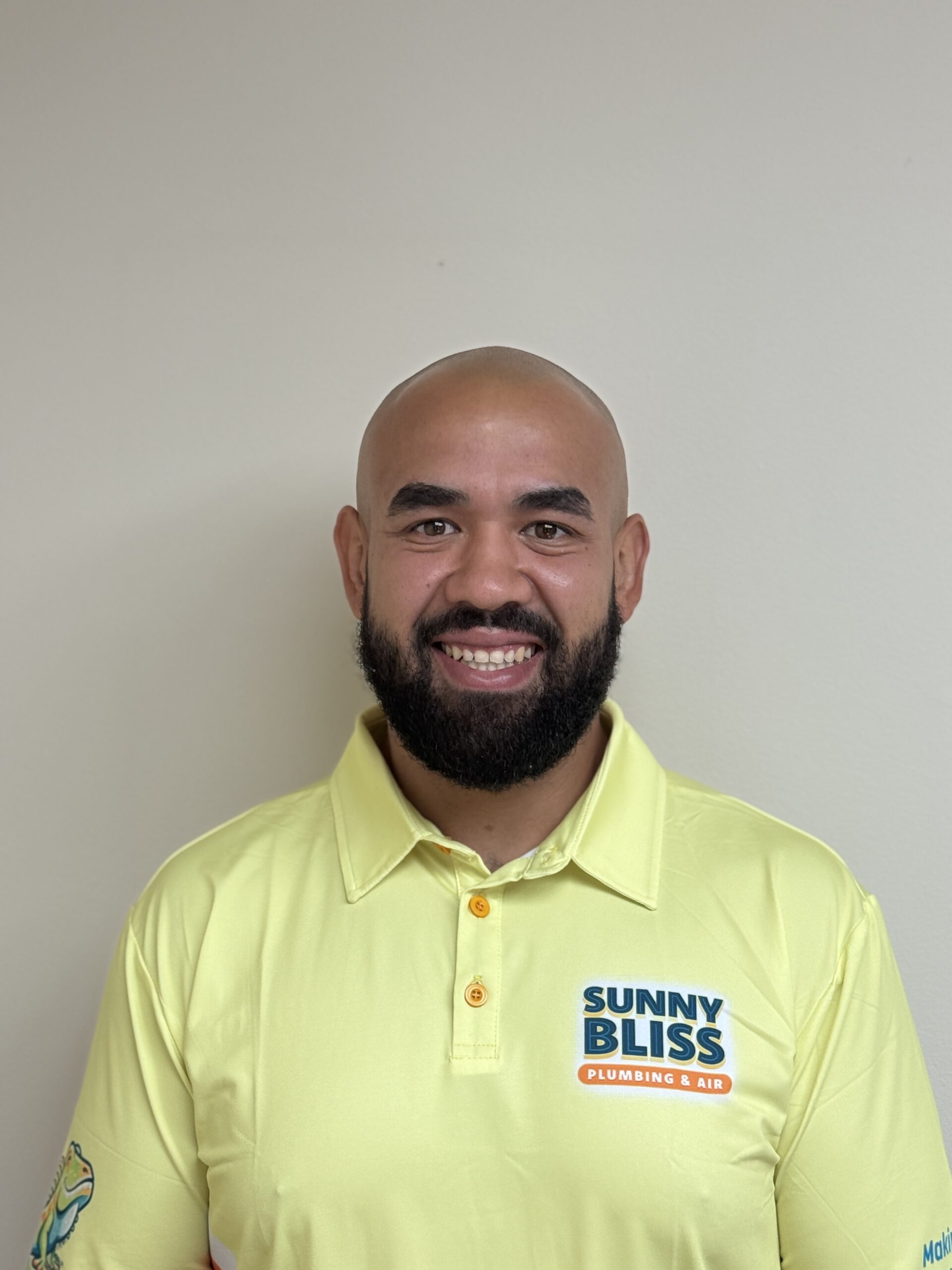
Carla Ciperski
Technician: Leo
“Great experience with Sunny Bliss Plumbing & Air. They were professional, showed up on time, and got the job done quickly. The pricing was very fair and the whole process was smooth. It’s not always easy to find reliable companies, but these guys were great. I definitely recommend them.”

Julio Rosillo
Technician: Tommy
“Great job, Sunny Bliss! Same-day service, effective communication, and a responsible, professional team. Leo not only solved the problem but also identified the source of it. Very professional throughout the entire process. I will definitely recommend this company!”
Luciene Cofresi
Technician: Leo
Clogged Drain or Sewer Emergency? Call Now.
Same-day service · Flat-rate pricing · Camera inspection on every sewer call · Workmanship guaranteed · Serving all of Miami-Dade
Schedule an AppointmentCall for Service Today