
Miami Plumbing Services — Licensed Plumber, Same-Day Since 1990
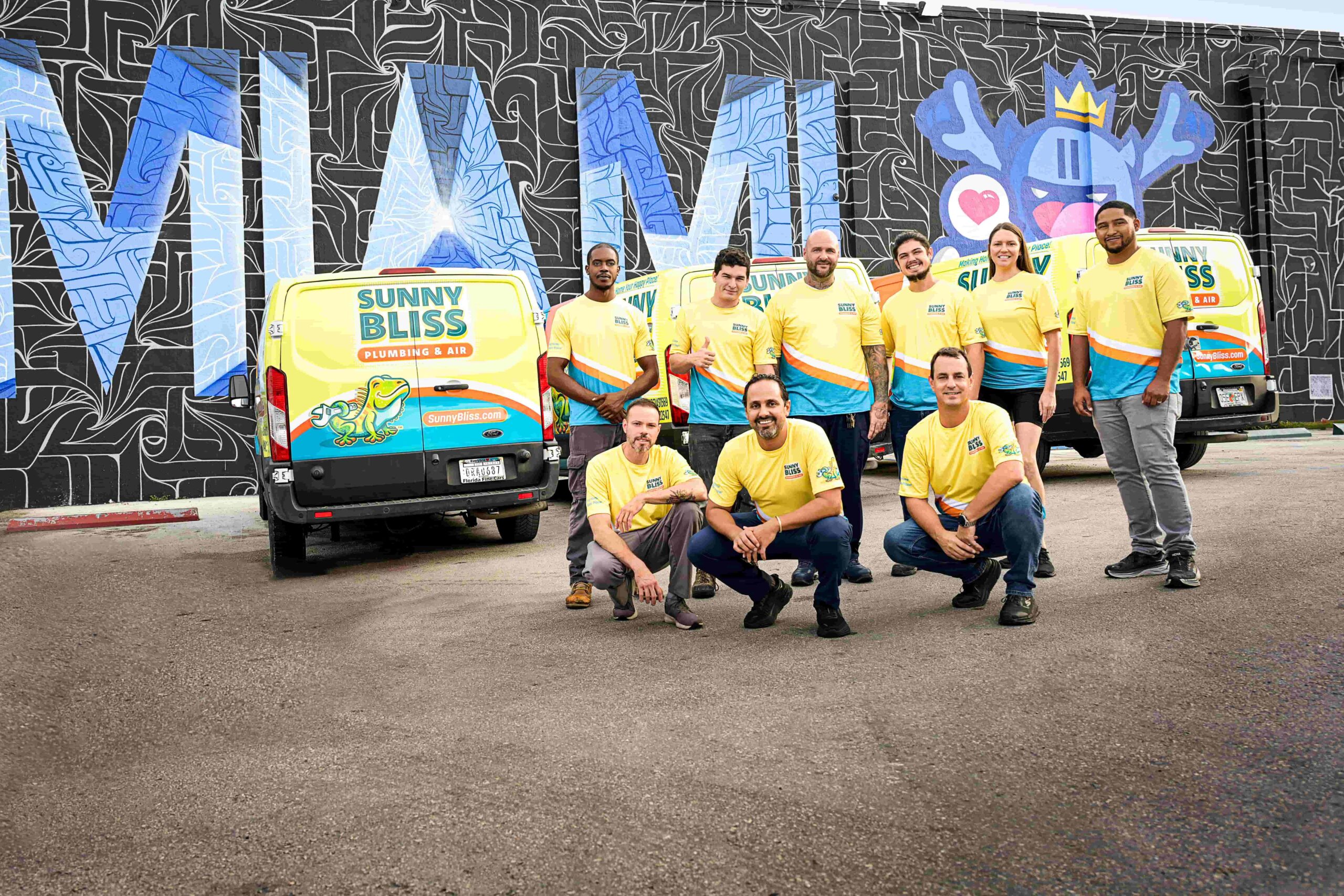
Looking for a plumber in Miami who actually shows up when they say they will? That’s Sunny Bliss. From a leaking water heater in Coral Gables to a slab leak in Pinecrest to a full repipe in Miami Beach — our licensed master plumbers handle everything residential and commercial plumbing throws at you. 36 years serving Miami-Dade, 1000+ five-star reviews, and a workmanship guarantee on every job.
We’re the plumbing service Miami homeowners call when they want it fixed right the first time — not the cheapest quote from someone running an hourly meter. Upfront flat-rate pricing, no overtime charges, and a live dispatcher 24/7. Licensed in Florida (#CFC1433145), fully insured, and proudly serving Miami since 1990.
Need drain cleaning, sewer repair, or hydro-jetting? See our drain & sewer team. AC trouble? See our air conditioning services.
Call (305) 504-6091 for same-day plumber service across Miami-Dade, or book online in under 60 seconds.
Years in Business
5-Star Reviews
Active Customers
Counties Served
The Problem
Why Miami Plumbing Is Harder Than the Rest of the Country
Miami isn’t an easy place to own plumbing. Salt air corrodes fittings. Hard groundwater scales up water heaters and shortens their life by 30-40%. Heavy rains and shifting ground stress supply lines in homes built on South Florida’s fill and coral-rock foundations. Afternoon thunderstorms create pressure spikes that shred old supply lines.
If you’re dealing with low water pressure, rust-colored water, a water heater that’s older than your car, or a mystery leak you can’t trace — you’re not imagining it, and you’re not alone. Miami homes need a plumber who knows what’s actually breaking, not someone working from a Chicago training manual. Here’s how we solve the three plumbing problems we see most:

Hidden leaks & slab leaks — found in one visit, no demolition
Slab leaks and behind-wall pipe leaks are Miami’s most expensive silent problem. Most homeowners only discover them when their water bill doubles or ceilings start to stain. Our Miami leak detection team uses acoustic listening equipment, thermal imaging, and tracer-gas to pinpoint the exact location without tearing up floors or walls. Same-day diagnosis. Fixed-price repair quote before we touch anything.
Water heater failures — same-day repair or replacement
Tank water heaters in Miami last 8-10 years (not the 12 advertised) because our hard water scales the heating element and corrodes the anode rod. When yours fails, we stock the top-selling sizes (40, 50, 75 gallon) and tankless units on the truck — most replacements happen the same day you call. Whether you need a water heater repair, replacement, or upgrade to tankless, we’ll quote a flat price before we start.
Replacement typically runs $1,400–$3,800 installed depending on tank size and code upgrades — see our water heater installation in Miami page for a full cost breakdown and same-day options.
Galvanized & polybutylene repiping — done in 2-4 days, you stay in the home
Any Miami home built before 1985 likely has galvanized steel supply lines rusting from the inside out, or polybutylene pipes that are a ticking time bomb for Florida insurance claims (most carriers won’t renew without remediation). We repipe in PEX or copper with minimal drywall access points — typically 2-4 days for a 3-bedroom home, and your family stays in the home throughout. Free pre-purchase inspection if you’re buying.
Plumbing Services Miami
Every Plumbing Repair, Installation, and Emergency — One Phone Call
Whether it’s a $150 faucet repair or a $25,000 full repipe, Sunny Bliss handles the full scope of residential and commercial plumbing across Miami-Dade. Every technician is background-checked, drug-tested, and manufacturer-trained.
Water Heater Services Miami
Water Heater Repair & Installation
- Same-day water heater repair for tank and tankless units
- Water heater replacement — 40, 50, 75 gallon tanks stocked on the truck
- Tankless water heater installation (Rinnai, Navien, Noritz)
- Annual flush and anode rod replacement to double tank life in hard water
- Heat pump water heater upgrades (FPL rebate-eligible)
- All major brands: Rheem, A.O. Smith, Bradford White, Bosch
Fixtures & Connections
Toilet, Faucet & Fixture Repair
- Faucet repair and installation (kitchen, bathroom, tub, shower)
- Toilet repair, replacement, and flange repair
- Garbage disposal install and repair
- Washing machine and ice-maker hookups
- Dishwasher plumbing connections
- Hose bib & outdoor faucet repair
Detection & Diagnostics
Leak Detection in Miami
- Non-invasive leak detection with acoustic listening and thermal imaging
- Slab leak location and repair under concrete foundations
- Hidden wall and ceiling leak diagnosis — no exploratory demolition
- Pool equipment and pool deck leak detection
- Pre-purchase leak inspections for Miami home buyers
- Insurance documentation: photos, moisture readings, written scope
Whole-Home Repiping
Repiping Miami Homes
- Whole-home repipe in PEX or copper — 2-4 days, you stay in the home
- Galvanized steel pipe replacement (required for most pre-1985 Miami homes)
- Polybutylene pipe replacement (Florida insurance compliance)
- Water line repair from meter to house
- Main water line replacement and re-routing
- Free repiping consultation for home buyers and sellers
24/7 Emergency Service
Emergency Plumber Miami — 24/7
- 24/7 emergency plumber service with a live dispatcher — no answering machines
- Burst pipe repair and emergency water shut-off
- Overflowing toilet response, same-day
- Same flat-rate pricing nights, weekends, and holidays — no overtime
- Coordination with water damage mitigation companies
- Average response time: 60-90 minutes across Miami-Dade
Specialty Services
Gas Line Installation & Repair
- Gas line installation for stoves, water heaters, dryers, and pool heaters
- Gas leak detection and repair
- Gas line inspection for real estate transactions
- Natural gas and propane service
- Emergency gas shut-off valve installation and replacement
- All permits handled, City of Miami and Miami-Dade County
Our Promises to You.
No fine print, no moving targets. Here’s exactly what you get when you call Sunny Bliss.
Upfront Flat-Rate Pricing
You see the price before we start, and that’s what you pay. No hourly meters running, no surprise fees at the end, no “we ran into something extra.” If the scope changes mid-job, we stop and talk to you before doing anything.
Workmanship Guaranteed
Every repair and installation is backed by our workmanship guarantee plus the manufacturer’s warranty. If something we did isn’t right, we come back and fix it — no charge, no argument.
Same-Day Service, No Overtime Charges
Call us in the morning, we’re usually there by afternoon. Call us at 11 PM on a Sunday, we still show up — and you’ll never pay extra just because it’s a weekend, a holiday, or the middle of the night.
Licensed, Insured, Trained & Background-Checked
Every technician who walks into your home has been vetted, licensed, and insured. Plumbing #CFC1433145, AC #CAC1823405 — both active, both verifiable. If a company can’t tell you that, you shouldn’t let them in.
FAQ
How much does a plumber charge per hour in Miami?
Most Miami plumbers charge $90-150 per hour, but hourly billing is where homeowners get burned — a “one-hour job” can turn into three on someone else’s clock. Sunny Bliss doesn’t bill hourly. We quote flat-rate prices before any work starts so you know the total cost upfront. A simple drain clear or faucet swap typically runs $250-$450 all-in. Water heater replacement is $1,400-$2,800 depending on size. Full repipe is $8,000-$25,000 depending on home size. Call us with the issue and we’ll quote ranges over the phone before we roll a truck.
Why is my water heater leaking?
Most leaks come from one of four spots: the temperature & pressure (T&P) relief valve, the drain valve at the bottom, the cold/hot water connections at the top, or the tank itself. Valve and connection leaks are usually fixable. A leak from the tank body almost always means the steel has rusted through from the inside — that tank needs to be replaced, not repaired. Miami’s hard water accelerates this, which is why most water heaters here don’t make it past 8–10 years. If you see water on the floor around the unit, shut off the gas or breaker and the cold water supply, then call us — a leaking tank can fail catastrophically.
How long does a water heater last in Miami?
Manufacturers rate tank water heaters for 8–12 years, but in Miami you should plan on the lower end — 8 to 10 years for tank units and 15 to 20 for tankless. Our hard water leaves heavy mineral scale inside the tank, which insulates the heating element, makes it work harder, and corrodes the anode rod faster. Annual flushing roughly doubles the useful life. If your heater is past 8 years and you’re seeing rusty hot water, popping or rumbling sounds, or longer recovery times, it’s time to plan the replacement before it fails on you.
Does homeowners insurance cover plumbing repairs in Florida?
It depends on what failed and why. Florida policies generally cover sudden, accidental water damage caused by a plumbing failure — for example, a pipe that bursts overnight and floods a room. They usually do NOT cover the pipe itself, gradual leaks, damage from poor maintenance, or full repipes for old galvanized or polybutylene pipes (those are a known exclusion most carriers will write you up for). Slab leaks are a gray area — the leak detection and access work are sometimes covered, the pipe repair often isn’t. We give you photos, moisture readings, and a written scope you can hand straight to your adjuster, which makes the difference on borderline claims.
How much does it cost to replace a water heater in Miami?
A standard 40 or 50-gallon tank water heater installed in Miami typically runs $1,400–$2,800 including the unit, permit, and installation. Tankless units are $3,800–$6,500 installed, but last 15–20 years instead of 8–10 and pay back through lower energy bills and unlimited hot water. Hybrid heat-pump water heaters (which qualify for FPL rebates) usually fall in between. We stock the most common sizes on the truck for same-day replacement when yours fails.
Is a leaking water heater dangerous?
Yes — and the danger goes beyond water damage. A leaking tank is structurally compromised, which means it can fail catastrophically and release 40+ gallons in minutes. Gas water heaters with leaks risk pilot light failure or, in rare cases, gas escape if the leak damages connections. Electric units near pooling water are an electrocution risk. If you spot a leak, shut off the cold water supply (the valve on top), kill the power or gas, and get a plumber out the same day. Don’t sleep on it overnight.
How long does it take to install a water heater?
For a standard tank-to-tank swap (replacing your old water heater with a similar-size unit in the same location), most installations take about 4 hours from arrival to departure, including hauling away the old unit. Tankless installations take longer — typically 6–8 hours — because they require gas line, venting, and electrical upgrades. Switching from tank to tankless or relocating the unit can take a full day. We schedule realistically and quote total time upfront so you can plan around it.
Why is my toilet leaking from the bottom?
Almost always a failed wax ring — the seal between the toilet base and the floor flange. They typically last 20–30 years, then start seeping with every flush. You’ll see water pooling at the base, smell sewer gas, or notice the floor around the toilet feeling soft. Less commonly, the issue is a cracked toilet base, a loose flange bolt, or a flange that’s lower than the finished floor. Don’t ignore it: water seeping under tile rots subfloor and grows mold fast in Miami’s humidity. Replacement is usually around $500 plus materials and takes about one to two hours.
Why is my outdoor faucet leaking?
If it leaks only when turned on, the issue is usually a worn washer inside the valve stem — a $5 part, 30-minute fix. If it leaks when turned off, the problem is more serious: the internal valve seat has corroded, or in freeze-prone areas, the pipe behind the wall has cracked. In Miami we don’t worry about freezing, but salt air corrosion is the equivalent — it eats brass valves from the inside out. Frost-free hose bibs are the long-term fix and cost about $250–$400 installed.
How much does it cost to replace a toilet?
A standard toilet replacement in Miami typically runs $550–$1150 installed, including the new toilet (basic models around $200–$400, premium models $500–$1,500+), a new wax ring, supply line, and disposal of the old unit. Higher-end factors that add cost: a corroded or recessed flange that needs repair, mounting bolts seized into the floor, or a different drain rough-in size. We carry the most common toilet sizes on the truck for same-day swaps, and we’ll always flag if your flange needs work before we install — no surprise add-ons after the fact.
Does homeowners insurance cover sewer line replacement in Florida?
Standard Florida homeowners policies almost never cover sewer line replacement — even when the line collapses without warning. Most insurance companies treat sewer lines as the homeowner’s maintenance responsibility, and the line from your house to the city connection is on your property and your bill. The exceptions: some policies offer optional “service line” or “buried utility” endorsements (often $30–$50/year) that do cover it, and many cover the resulting water damage if a backup floods your home. If you have an older Miami home with cast-iron or clay sewer lines, adding the endorsement is one of the best small investments you can make.
Why is my toilet bubbling or gurgling when the shower runs?
That sound means your main drain or sewer line is partially blocked — water from the shower is forcing air back through the toilet because it can’t drain properly. Common Miami causes: tree roots invading old clay sewer lines, grease and hair buildup, or a collapsed section in cast-iron drain pipes (which most pre-1975 Miami homes have). Don’t ignore it. A gurgling toilet is the early warning before a full sewer backup, and waiting usually means raw sewage on your floor. We’ll camera-inspect the line, locate the blockage, and clear or repair it.
How do I know if a plumber is overcharging me in Miami?
Five red flags to watch for: (1) Hourly billing with no cap — costs add up fast and you have no idea what the total will be. (2) Refusing to give a written quote before starting work. (3) “We found something extra” mid-job without stopping to discuss it with you. (4) No license number visible on the truck, uniform, or invoice (Florida requires #CFC for plumbing — ours is CFC1433145). (5) Pressure to decide right now without giving you time to think. The fix: get a flat-rate quote in writing, verify the license at MyFloridaLicense.com, and don’t authorize work beyond the original scope without a new quote. We follow all five of these rules on every job.
Still have more questions?
What Miami Homeowners Say
Real reviews from Miami-Dade & Broward homeowners and property managers — water heater emergencies handled at midnight, slab leaks found without demolition, and full repipes finished ahead of schedule.
“Very impressed with their service. The technician who came over was Noel. He installed a new water heater and everything went real smooth. He was super professional and communicative. Very pleasant and good mannered. Left everything spotless. Very happy with this service. Will definitely call them again if I need a repair or replacement. Thanks again for everything Noel 🙏😊”

Lilita B.
Technician: Noel
“Very satisfied with the service provided by the whole team. Tommy, came to my house and installed a new toilet. He is very knowledgeable and kind, he tried to get me the best and honest opinion on what needed to be done. Camila, at the office was very helpful and kind. Fabio, great at customer service. I recommend Sunny Bliss 100%”

Ana C Seijas Garwacki
Technician: Tommy
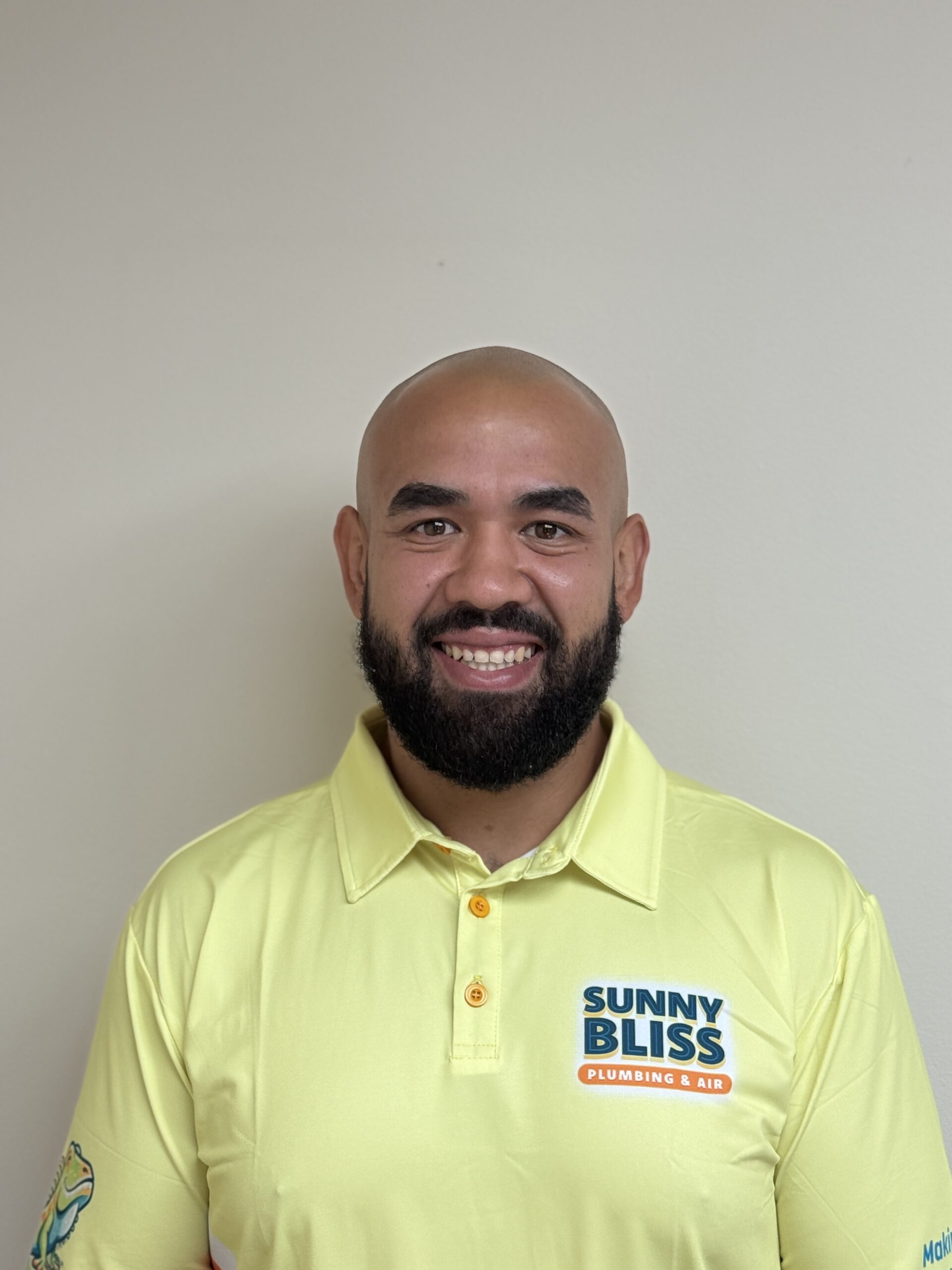
“Great job, Sunny Bliss! Same-day service, effective communication, and a responsible, professional team. Leo not only solved the problem but also identified the source of it. Very professional throughout the entire process. I will definitely recommend this company!”
Luciene Cofresi
Technician: Leo
Plumbing or AC Problem in Miami? We Can Help Today.
Don’t wait for a small leak to become a flood, or for your AC to fail on the hottest day of the year. Call Sunny Bliss now — we answer 24/7, dispatch same-day, and guarantee upfront pricing with no overtime charges.
Schedule an AppointmentCall for Service Today