
Bathroom Plumbing Rough-In in Miami — A Licensed Plumber’s Guide
Planning a bathroom remodel? Sunny Bliss Plumbing & Air handles rough-in plumbing across Miami-Dade and Broward. Licensed, permitted, inspected. Call 305-504-6091 for a quote.
If you’re remodeling a bathroom in Miami or building one from scratch, the rough-in is the work that happens before any wall goes up. Pipes, drains, vents — all installed and pressure-tested before drywall covers them. Get it right and you forget about your plumbing for 30 years. Get it wrong and you’ll be opening up new tile work in 18 months chasing a leak.
This guide covers what bathroom plumbing rough-in actually involves, what Miami-Dade code requires, what it costs in this market, and where the work commonly goes sideways. We’re Sunny Bliss Plumbing & Air — a licensed Florida plumbing contractor (CFC1433145) serving Miami-Dade and Broward since 1990. We’ve done rough-ins on remodels and new construction in every neighborhood, every era of housing stock, every permit office in the county.
What Rough-In Plumbing Actually Is
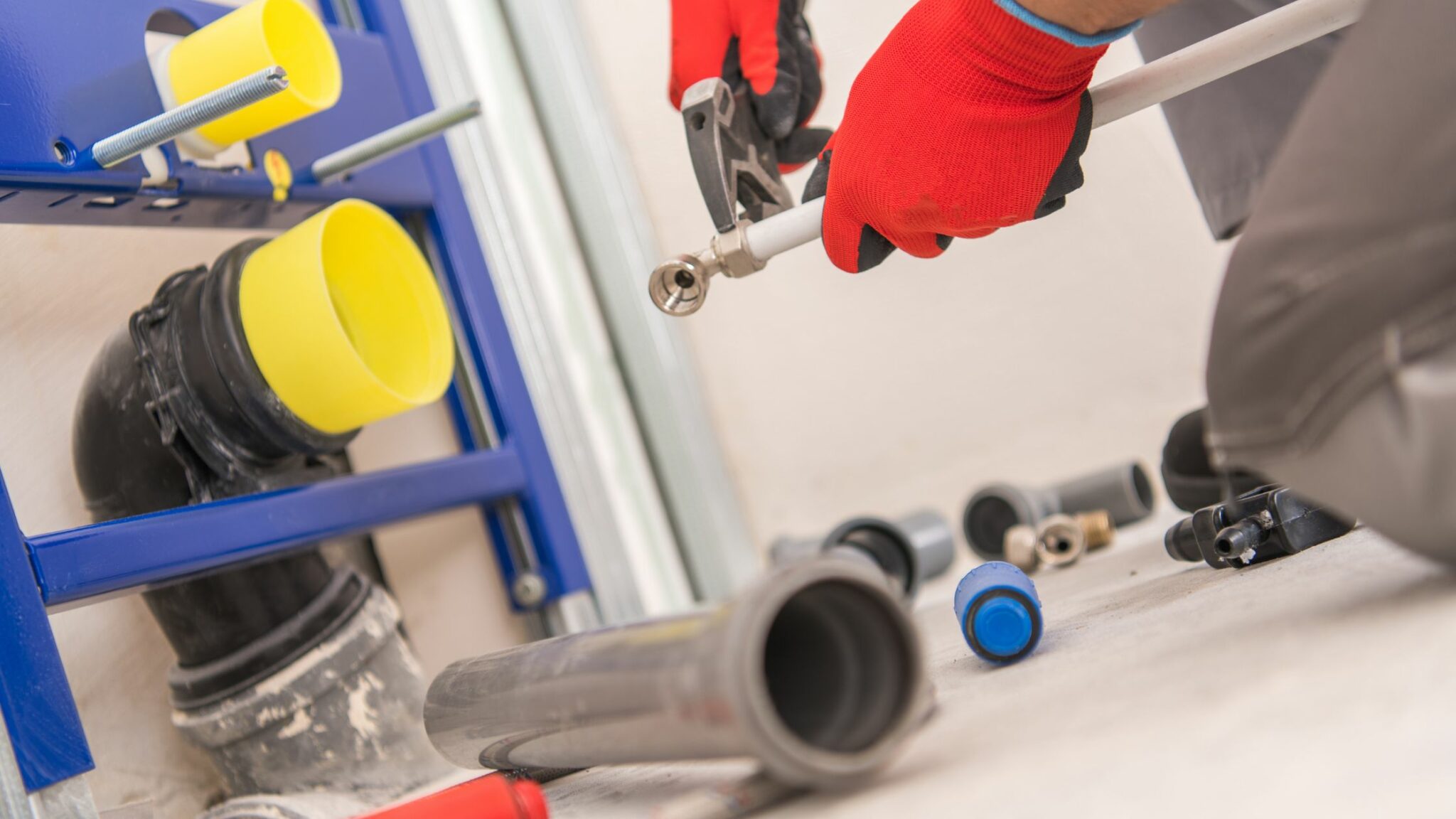
Rough-in is the phase where all the in-wall and under-floor plumbing gets installed: supply lines (hot and cold), drain lines, vent stacks, and fixture connection points. It happens after framing and before drywall. The plumber doesn’t install the toilet, sink, or shower fixtures during rough-in — those come during the “finish” phase. Rough-in just stubs out where everything will eventually connect.
The work is invisible once the bathroom is done. That’s the point. It’s also why it’s the easiest part of a project to cut corners on — and where corners get cut, problems show up years later, after warranties have expired.
Miami-Dade Code Requirements You Can’t Skip
Bathroom plumbing rough-in in Miami-Dade isn’t optional handyman territory. It’s permitted work that requires a licensed plumbing contractor, and inspectors here are thorough.
A few requirements that catch DIYers and out-of-state contractors off guard:
Permits are required. Any bathroom remodel that touches plumbing requires a permit pulled by a licensed Florida plumbing contractor (state license CFC, like our CFC1433145). Permit fees in Miami-Dade run $200–$600 depending on scope. Unpermitted plumbing becomes a serious problem when you sell — title companies and home inspectors flag it, and you may pay to redo work that was already done.
HVHZ wind-load requirements. Miami-Dade is a High Velocity Hurricane Zone. Anything penetrating the roof — including vent stacks — has enhanced fastening requirements. Standard vent boots and basic roof flashing won’t pass inspection here. Hurricane damage to under-spec vents is one of the most common post-storm plumbing repairs we do.
Trap arm distances matter. Code specifies maximum distances from a fixture’s trap to its vent. In Miami’s older homes especially — where bathrooms get moved or added during remodels — this is where rough-ins fail inspection. The fixture seems to work fine at first, then a year later you smell sewer gas because the trap was siphoning dry.
Slope requirements on drains. Drain lines slope at 1/4 inch per foot toward the main. Sounds simple. In tight bathroom remodels with limited horizontal room, achieving proper slope while staying within code-required pipe sizes is the puzzle that separates experienced plumbers from amateurs.
Approved materials. Florida Building Code is specific. PEX is approved with caveats. CPVC is fine. PVC for drain and vent only. Galvanized steel for new supply work is not allowed. Copper for supply is approved but rarely cost-justified anymore.
Planning a bathroom remodel? We pull the permit, do the rough-in, and pass the inspection — all under one license. No coordinating between contractors and inspectors.
Call 305-504-6091 | Serving Miami-Dade & Broward
Standard Rough-In Dimensions
These are the measurements that determine where your plumbing stubs out of the wall. They’re not negotiable — they’re what your fixtures need to connect to.
Toilet
- Closet flange center: 12 inches from the finished rear wall (12-inch rough-in is standard; 10-inch and 14-inch versions exist for older Miami homes with non-standard framing)
- Side clearance: minimum 15 inches from toilet centerline to any adjacent wall or fixture
- Cold water supply: 6 inches to the left of toilet centerline, 7 inches above finished floor
Bathroom Sink
- Drain centerline: 16–20 inches above finished floor (18 inches is typical for vanity sinks)
- Hot and cold supply lines: 21 inches above finished floor, 8 inches apart, centered on drain
Shower
- Drain location: 2 inches from any finished wall, positioned per the shower pan you’ve selected
- Mixing valve: 48 inches above finished floor
- Shower head: 80 inches above finished floor (standard Miami ceiling is 96 inches — adjust for higher ceilings or rain heads)
Tub
- Drain location varies by tub model (left, right, or center drain)
- Overflow drain stub: per the tub manufacturer’s spec sheet
- Faucet and shower stubs: per the trim kit you’ve chosen
These are starting points. Your fixture manufacturer’s spec sheet has the exact dimensions for your specific tub, sink, or toilet. Always check the spec sheet before rough-in. Building to “standard” dimensions when you’ve selected a non-standard fixture is the most expensive mistake we see in Miami remodels.
Where Rough-Ins Go Wrong in Miami
Five problems we see repeatedly when called to fix someone else’s bathroom plumbing:
1. Vents undersized or improperly located. The vent’s job is to let air into the drain system so traps don’t siphon dry. Skip it or undersize it and you’ll have phantom sewer-gas smells, slow drains, and gurgling fixtures. Common in DIY remodels and work done by handymen instead of licensed plumbers.
2. Drain slope problems in older homes. Pre-1970s Miami homes often have cast-iron drains with limited slope. Adding new fixtures requires careful re-routing. We see remodels where someone tried to feed a new shower into an existing 2-inch drain at a slope that physically can’t carry the flow. Backups within months.
3. Wrong rough-in for selected fixtures. Toilet rough-in set at 12 inches but the customer chose a 10-inch toilet to fit a tight space. Now there’s a 2-inch gap and a $400 toilet that won’t sit flush. Easier to catch at rough-in (move the flange) than after finish.
4. Skipping shut-off valves at the fixture. Every fixture needs an individual shut-off valve at the supply. Saves you when a faucet fails or you replace it down the road. Cheap rough-ins skip them — every supply line runs straight from the main. Means turning off water to the whole house every time anything needs service.
5. Improper vent termination through Miami-Dade roof. HVHZ requires specific roof penetrations and flashing for vent stacks. We’ve seen rough-ins where the vent terminated in the attic instead of penetrating the roof (illegal, dangerous, guaranteed inspection failure). We’ve also seen vent boots that weren’t HVHZ-rated and started leaking after the first major rain.
Inherited a problem rough-in? If you bought a Miami home with unpermitted plumbing work, or your previous remodel is failing inspection at resale, we diagnose and correct. One visit usually tells us what’s needed.
Call 305-504-6091
What Bathroom Plumbing Rough-In Costs in Miami
Pricing varies significantly based on scope. Here are realistic Miami-Dade ranges as of 2026:
Simple remodel — replacing fixtures in the same locations, no new plumbing routes: $2,500–$4,500. The plumber is mainly inspecting and updating supply lines and valves, then making sure connections are ready for new fixtures.
Bathroom remodel with relocations — moving the toilet or vanity, adding a second sink, changing tub to shower: $5,000–$9,000. New drain lines, new venting, new supply runs. Permit included.
New bathroom in existing home — building a bathroom where one didn’t exist (basement, attic conversion, garage conversion): $8,000–$15,000. Full new plumbing tree from main drain and supply.
New construction — entire bathroom in new building: $3,500–$7,000 per bathroom. Done at framing stage, more efficient than retrofit work.
What affects price:
- Distance from existing plumbing. Adding a bathroom on the opposite side of a one-story Miami home costs more than adding one adjacent to existing lines.
- Slab vs. crawlspace. Most Miami homes are slab-on-grade — running new drains means cutting concrete. Adds $1,500–$3,000 vs. crawlspace homes.
- Permit complexity. Miami-Dade permits for major plumbing work require revisions and inspections that take longer than simpler jobs.
- Number of fixtures. A simple 3-piece bathroom is cheaper to rough in than a master bath with two sinks, a soaking tub, and a separate shower.
- Fixture selections. Wall-hung toilets, steam showers, and high-end soaking tubs all require specialized rough-in work.
A few things that should never affect rough-in price (and if they do, ask why):
- Time of year (plumbing is plumbing — August doesn’t cost more than February)
- “Emergency” markup (rough-in is scheduled work, never emergency)
- Hourly billing (any reputable Miami plumber gives a fixed price for rough-in scope)
Why Venting Matters in a Miami Bathroom Rough-In
Venting is the part of the rough-in that DIYers and unlicensed contractors get wrong most often. Here’s what it actually does and why it matters more in Miami than most places.
Every fixture has a P-trap — the curved section under your sink that holds water. That water is the seal that stops sewer gas from coming up through your drains into your home. The trap only works when air pressure on both sides of the water is equal. Without proper venting, every time water rushes down the drain, it pulls the water out of the trap behind it, breaking the seal.
The vent — the white pipe sticking up through your roof — lets air into the drain system so traps stay full.
Three things make Miami harder on vent systems than most of the country:
Humidity. Miami’s average relative humidity sits above 75% most of the year. Water condenses inside vent pipes constantly. If the system has a bend creating a low point, condensation collects. Over years, mineral buildup from collected condensate can partially or fully block a vent pipe. We’ve cut open vents from older Miami homes that were essentially solid blocks of scale.
Hurricane wind loads. Miami-Dade’s HVHZ code requires enhanced fastening for everything penetrating the roof. Bends in vent stacks create stress concentration points. During hurricane-force winds, those points fail — pipe separations in the attic, water intrusion around roof flashing, or vent stacks ripped clean off.
Thermal expansion. Florida temperature swings — between morning lows and afternoon highs, and between a 70° AC’d interior and a 130°+ attic in August — mean PVC moves. A lot. Bends are where that movement concentrates. Without proper expansion supports, you get cracked fittings, leaks at joints, and pipes that slowly pull apart.
This is part of why Miami rough-ins cost more than rough-ins in places like Atlanta or Dallas. The code requirements and material specs are tighter, and they exist for real reasons.
When to Call Sunny Bliss
Sunny Bliss handles bathroom rough-ins across Miami-Dade and Broward. We’re licensed Florida plumbing contractors (CFC1433145), licensed general contractors (CGC1527226), and AC contractors (CAC1823405). For most remodels, that means one company handling all the trade work instead of coordinating three licenses.
Call us if:
- You’re planning a bathroom remodel and need rough-in done correctly the first time
- You’re a general contractor or designer who wants licensed plumbing work for a client project
- Your previous rough-in is failing (drains backing up, sewer smells, leaks) and needs diagnosis and repair
- You’re adding a bathroom and need a permit pulled along with the work
- You’re buying a Miami home and the inspection flagged unpermitted plumbing modifications
What we do:
We pull the permit. We do the rough-in to current Miami-Dade code — HVHZ-rated venting, proper drain slopes, vented traps where required, individual shut-off valves at every fixture. We schedule and pass the rough-in inspection. We don’t disappear after the rough-in — we come back for finish plumbing when your tile, drywall, and cabinetry are done.
We work with general contractors, designers, and homeowners directly. Whatever fits your project.
Frequently Asked Questions
How long does a bathroom plumbing rough-in take?
For a standard bathroom remodel, the rough-in itself is usually 1–2 days of work. Add 3–7 days for permit issuance before we can start, and 1–3 days waiting for inspection after we finish. Total elapsed time from start of permitting to passed inspection is typically 2–3 weeks. New construction rough-ins integrated into the larger build schedule run faster because the GC has already pulled permits.
Do I need a permit for bathroom plumbing in Miami?
Yes. Any plumbing work beyond like-for-like fixture replacement (e.g., changing a faucet for an identical model) requires a permit pulled by a licensed plumbing contractor in Miami-Dade and Broward. Unpermitted work can become a serious issue when you sell — title companies and inspectors flag it, and some buyers will demand it be redone before closing.
Can I do bathroom rough-in plumbing myself?
In Florida, you generally cannot pull your own plumbing permit unless you’re the owner-occupant pulling an owner-builder permit (which has restrictions and selling implications). Even then, the work has to pass inspection. For most homeowners, the cost of a licensed plumber doing the rough-in is far less than the cost of failed inspections, redo work, or a flooded cabinet 6 months in.
What’s the difference between rough-in and finish plumbing?
Rough-in is everything in the walls and under the floor — drains, vents, supply lines, fixture stubs. It happens before drywall. Finish plumbing is installing the toilet, sink, faucets, shower trim, and connecting them to the rough-in stubs. It happens after tile and drywall. Most plumbing contractors handle both.
How long does bathroom rough-in plumbing last?
Properly installed rough-in plumbing in a Miami home should last 40–60 years for drain lines and 30–50 years for supply lines, depending on materials. PEX has shorter track record (introduced widely in the 2000s) but engineering estimates are 50+ years. Cast iron drains from the 1940s–60s are reaching end-of-life now and are one of the most common repipe projects we do.
Do you service all of Miami-Dade and Broward?
Yes. We dispatch from five offices in Miami-Dade (Miami Beach, North Miami, Pinecrest, Westchester, and Hialeah Gardens) and cover the entire county plus most of Broward. Most service calls are same-day. Larger projects like bathroom rough-ins get scheduled based on permit timing and customer preference.
What does bathroom rough-in plumbing cost in Miami?
Roughly: $2,500–$4,500 for a simple remodel with no relocations, $5,000–$9,000 for a remodel with fixture relocations, $8,000–$15,000 for a new bathroom in an existing home, and $3,500–$7,000 per bathroom for new construction. Permit fees included. Final price depends on slab vs. crawlspace, distance from existing plumbing, fixture selections, and number of fixtures. We give a fixed written quote before any work starts.
Ready to Get Your Bathroom Rough-In Quoted?
Call Sunny Bliss Plumbing & Air at 305-504-6091 — licensed Florida plumbing contractor (CFC1433145) serving Miami-Dade and Broward since 1990.
Free site visit and written quote. Permit pulled and included in pricing. Inspection scheduled and passed. Finish plumbing done by the same company once your tile and cabinetry are in.
We’ll do the rough-in once, do it right, and you can forget about it for 30 years.